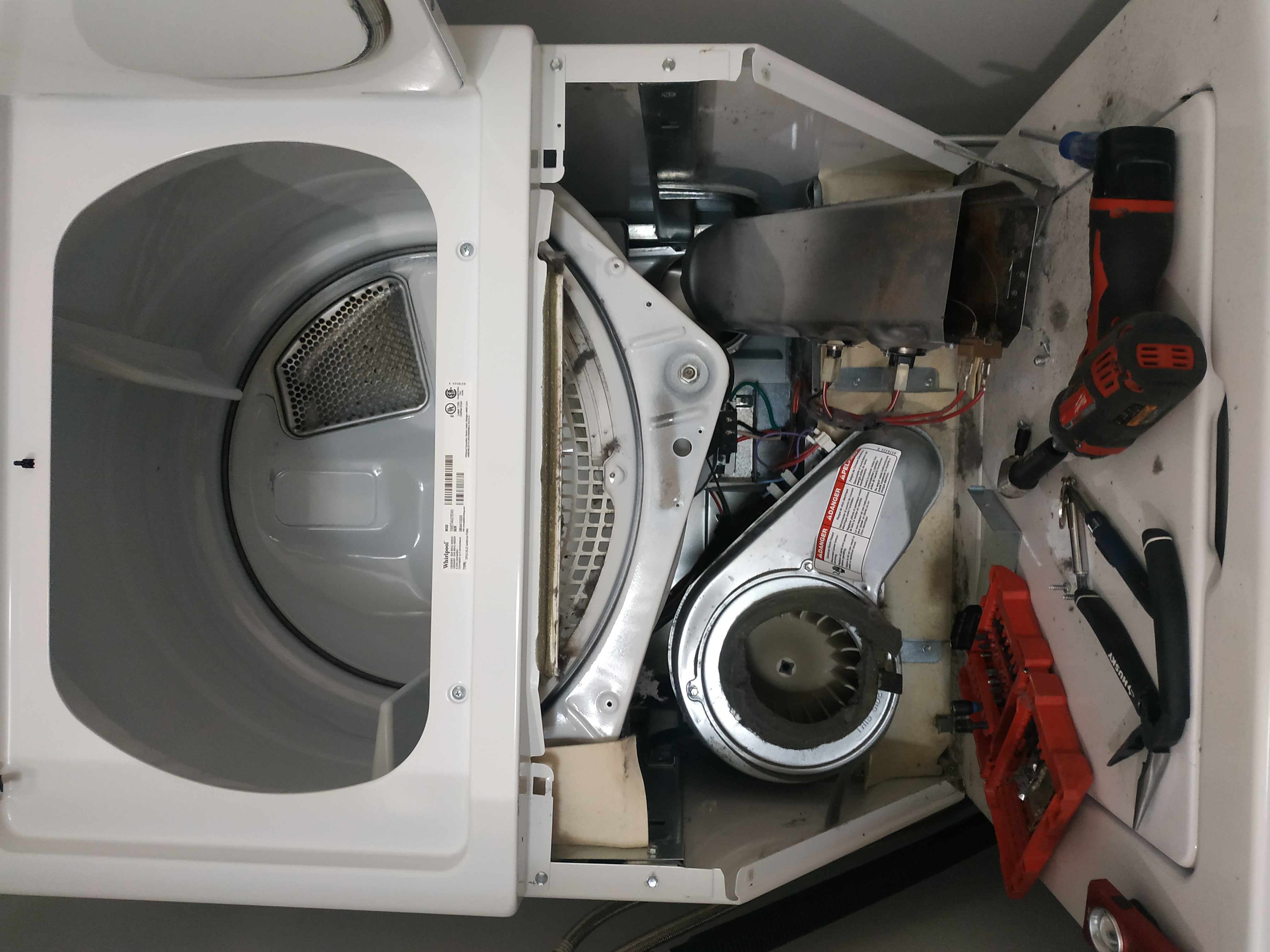
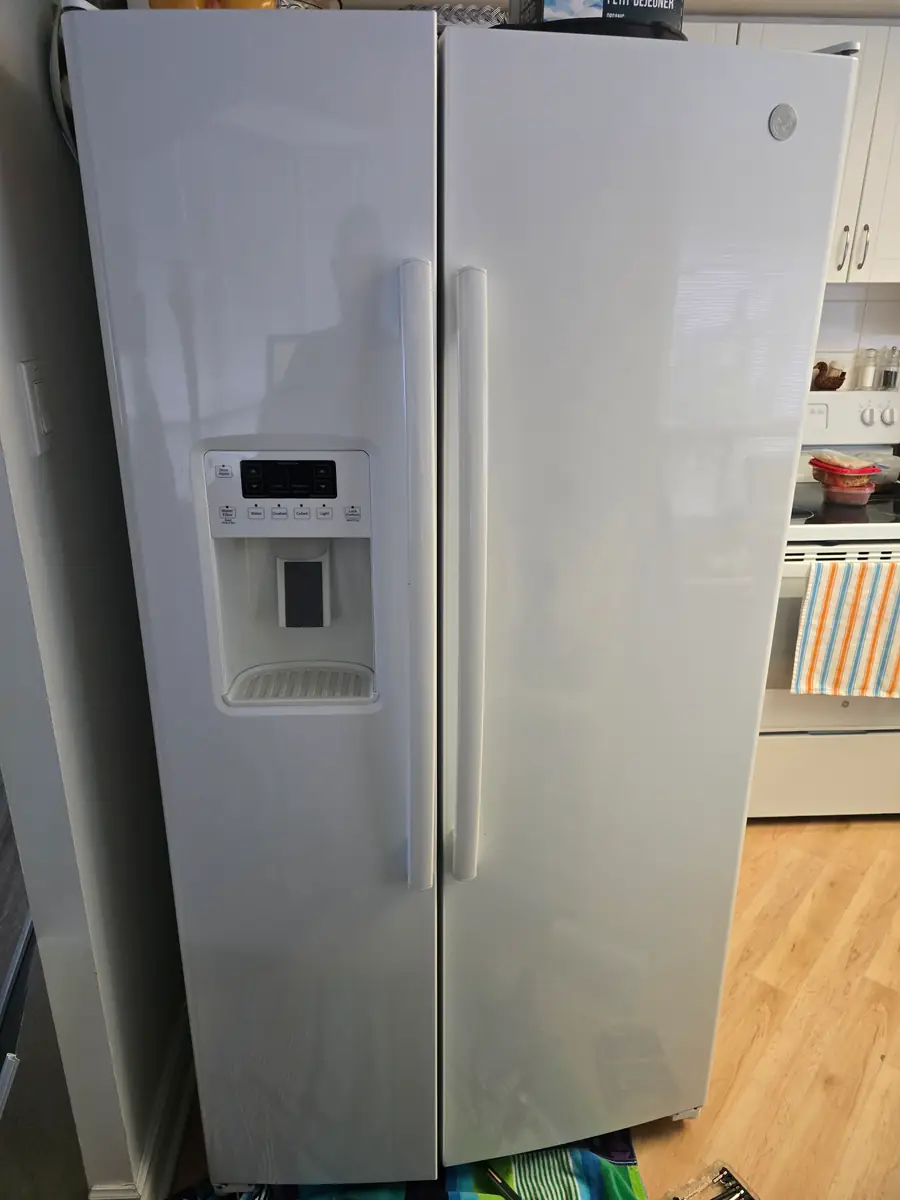
If the freezer is cold but the refrigerator compartment is warm, the cooling system may still be producing cold air, but that air may not be circulating correctly into the refrigerator compartment. Common causes include an evaporator fan problem, blocked airflow, frozen evaporator coils, damper failure, temperature-sensor issues, or related defrost and control problems. The symptom narrows the diagnosis, but it does not prove that any one component has failed.
What This Symptom Usually Tells You
Most household refrigerators cool the freezer first. A fan then moves cold air through vents and a damper into the fresh-food compartment. When the freezer stays cold but the refrigerator warms, technicians look closely at airflow, frost buildup, fan operation, sensors, and the damper before assuming the entire refrigeration system has failed.
1. Evaporator Fan Is Not Working
The evaporator fan moves cold air across the evaporator coils and distributes it through the freezer and refrigerator compartments. If the motor stops, the freezer may remain cold near the coils while airflow into the refrigerator becomes weak or disappears. You may hear clicking, scraping, or no fan sound at all. Because door switches, wiring, ice buildup, and controls can produce similar symptoms, professional diagnosis is often required. See our real GE evaporator fan repair case for an example of the access and replacement process.
2. Evaporator Coils Are Frozen
A thick frost layer can prevent air from passing through the evaporator. Heavy frost on the freezer's interior rear panel is a useful clue. The underlying problem may involve the defrost heater, sensor, fuse, drain, wiring, or control. Unplugging and fully thawing the refrigerator may temporarily restore cooling, but it does not repair the part that allowed the frost to return.
3. Air Vents Are Blocked
Food containers or packages can block the vents that carry cold air between compartments. An overfilled freezer can also restrict circulation around the evaporator area. Locate the vents identified in the owner manual, move items several centimetres away, and leave space for air to move. This is a safe first check that does not require tools.
4. Damper Control Is Stuck or Failed
The damper is a small controlled opening that regulates how much freezer air enters the refrigerator compartment. If it is stuck closed, obstructed, or its motor fails, the freezer can stay cold while the refrigerator receives too little cold air. A technician may need to inspect the damper, temperature feedback, and control signal together.
5. Dirty Condenser Coils
Dust-covered condenser coils make it harder for the refrigerator to release heat. This more often reduces overall cooling performance than causing an isolated warm refrigerator compartment, but it can contribute when airflow and room conditions are already poor. Clean only coils that the manufacturer identifies as homeowner-accessible, with the appliance disconnected from power.
6. Temperature Sensor or Thermistor Problem
Thermistors report compartment temperatures to the electronic control. An inaccurate reading can cause the control to run the fan, compressor, or damper at the wrong time. The displayed temperature may not match the actual food temperature. Confirm the temperature with an appliance thermometer, but leave resistance testing and wiring diagnosis to a technician.
7. Defrost or Electronic Control Problem
The defrost system periodically clears frost from the evaporator. A failed heater, sensor, fuse, or control can allow ice to block airflow. Electronic controls can also fail to operate the fan or damper correctly. These components interact, so replacing a part based only on the visible symptom can be expensive and ineffective.
Quick Refrigerator Troubleshooting Table
| Symptom | Possible Cause | What You Can Check | Technician May Be Needed? |
|---|---|---|---|
| Freezer cold, fridge warm | Evaporator fan or airflow problem | Listen for the fan and check airflow at refrigerator vents | Yes |
| Heavy frost on freezer rear panel | Defrost issue or frozen evaporator | Look for visible frost without removing panels | Yes |
| Weak airflow into refrigerator | Damper, fan, or blocked vent | Move food away from vents and avoid overfilling | Possibly |
| Both compartments gradually warming | Condenser airflow or cooling-system issue | Check settings and accessible coil area | Yes |
These symptoms suggest possible causes; they do not confirm a failed component without testing.
What You Can Check Before Calling for Repair
- Verify the refrigerator and freezer temperature settings.
- Make sure vents in both compartments are not blocked by food.
- Remove excess items if either compartment is tightly packed.
- Listen for unusual fan noises or a sudden absence of normal airflow.
- Look for excessive frost on the freezer's interior rear panel.
- Check that both doors close fully and the gaskets make continuous contact.
- Clean accessible condenser coils only when permitted by manufacturer guidance.
Do not test live electrical components, bypass door switches or safety devices, open the sealed refrigerant system, or disassemble an energized appliance.
Is the Food in a Warm Refrigerator Still Safe?
Health Canada recommends keeping a refrigerator at 4°C (40°F) or lower. Check the actual compartment temperature with a refrigerator thermometer and move perishable food to a working refrigerator or an ice-filled cooler if a safe temperature cannot be maintained. When you cannot confirm how warm food became or for how long, follow official food-safety guidance and discard food when in doubt. See Health Canada's safe food handling guidance.
Is This Refrigerator Worth Repairing?
The answer depends on the refrigerator's age, the failed component, the quoted repair cost, replacement cost, overall condition, energy use, and previous repairs. Premium, counter-depth, and built-in refrigerators can justify a repair that would not make sense for an older basic model. A professional diagnosis identifies the actual failure so you can compare realistic options rather than replace the appliance based on a symptom alone.
When to Call a Refrigerator Repair Technician
Schedule diagnosis when the refrigerator remains warm after basic checks, the evaporator fan appears not to operate, heavy frost repeatedly returns, cooling is inconsistent, the appliance makes unusual noises, an error code appears, or food temperature cannot be maintained. Appliance Trust provides refrigerator repair across Toronto and surrounding service areas.
Refrigerator still warm?
Get the Cooling Problem Diagnosed
Have an Appliance Trust technician determine whether the issue involves airflow, defrost, the evaporator fan, a sensor, the damper, or another component.
Frequently Asked Questions
- Why is my freezer cold but my refrigerator warm?
- The appliance may still be producing cold air, but that air may not be reaching the refrigerator compartment. Possible causes include a failed evaporator fan, blocked vents, frozen evaporator coils, a stuck damper, or a sensor or defrost-control problem.
- How do I know if my refrigerator evaporator fan is bad?
- Possible signs include weak or absent airflow from the refrigerator vents, unusual noise from the freezer area, or a cold freezer with a warm fresh-food compartment. These symptoms are not conclusive, so the fan and related controls should be professionally diagnosed.
- Can a refrigerator work if the evaporator fan is broken?
- The freezer may remain cold for a time, but the refrigerator compartment can warm because the fan is not circulating cold air. Continuing to run the appliance can also lead to inconsistent temperatures and food-safety concerns.
- Why does my refrigerator start cooling again after I unplug it?
- A power cycle or extended thaw may temporarily restore airflow or reset a control. If frost buildup, a sensor, fan, damper, or defrost component caused the problem, the symptom is likely to return until the underlying fault is corrected.
- Should I repair or replace a refrigerator that is not cooling?
- Consider the refrigerator's age, overall condition, repair history, failure type, estimated repair cost, and replacement cost. Premium and built-in refrigerators may remain economical to repair longer than basic freestanding models. A diagnosis provides the information needed for a sound decision.