A dryer that suddenly needs two or three cycles usually has an airflow, heating, load, sensor, or drum-drive problem. A clogged lint screen or exhaust vent is a common place to start, but it is not the only possible cause. The pattern of heat, airflow, noise, and cycle behaviour helps narrow down what should be checked next.
What a Longer Drying Time Usually Means
Drying requires heat, airflow, and drum movement. The machine must warm the clothes, tumble them so moisture can escape, and push humid air outside. A restriction or weak component in any one of those systems can extend the cycle even when the dryer still runs.
1. Lint Screen or Dryer Vent Is Restricted
Lint can collect in the screen, internal air path, flexible connector, wall duct, or exterior vent hood. When hot, moist air cannot leave efficiently, clothes stay damp and the dryer may become unusually hot. Clean the lint screen before every load and confirm that the exterior flap opens with strong airflow. If airflow remains weak, the vent path or dryer should be professionally inspected. Restricted dryer airflow can create an overheating and fire risk, so stop using the machine if you notice a burning smell or excessive heat.
2. Heating Element or Gas-Ignition Part Is Failing
Electric dryers rely on a heating element, while gas models use an igniter, flame sensor, and gas-valve components. A dryer may tumble normally but produce weak, intermittent, or no heat. Testing these systems involves high voltage or gas equipment and should be handled by a qualified technician.
3. Moisture Sensor or Thermostat Is Inaccurate
Sensor-dry cycles use moisture sensors and temperature controls to determine when clothes are dry. Residue on accessible sensor bars can affect readings, while a faulty sensor or thermostat may end a cycle too early or run it too long. Follow the owner's manual when cleaning sensor bars and arrange diagnosis if timing remains inconsistent.
4. The Dryer Is Overloaded
Clothes need space to lift, tumble, and expose wet surfaces to moving air. A tightly packed drum traps damp items in the centre of the load. Try a smaller load and separate heavy towels or bedding from lightweight clothing. If a normal load still takes too long, overloading is unlikely to be the only cause.
5. Belt, Idler Pulley, Rollers, or Blower Is Worn
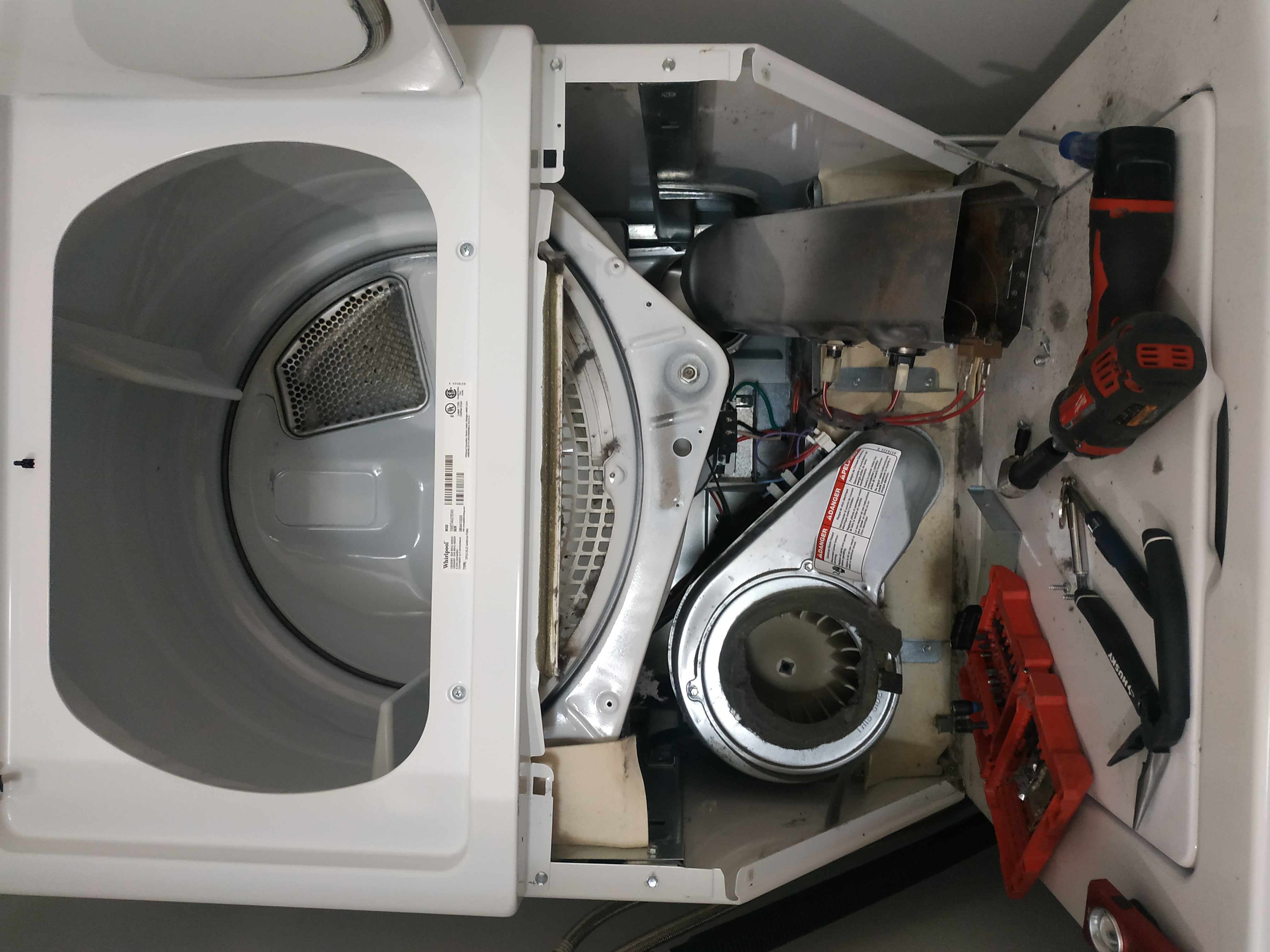
A worn drive or airflow component can reduce drum movement or the volume of air passing through the dryer. Squealing, scraping, rattling, a burning-rubber smell, or uneven rotation are useful clues. Appliance Trust has documented real dryer belt and idler pulley repair cases showing the access required to diagnose these parts.
Quick Dryer Troubleshooting Table
| Symptom | Possible Cause | What You Can Check | Technician May Be Needed? |
|---|---|---|---|
| Clothes hot but still damp | Restricted exhaust airflow | Clean lint screen and check exterior vent airflow | Possibly |
| Drum turns but little or no heat | Heating element, igniter, fuse, or control | Confirm cycle and temperature settings | Yes |
| Cycle ends early with damp clothes | Moisture sensor or load issue | Clean accessible sensor bars and try a normal mixed load | Possibly |
| Rattling, squealing, or uneven drum | Belt, idler pulley, rollers, or blower | Stop if noise is severe or burning smell appears | Yes |
Symptoms suggest possible causes but do not confirm a failed component without inspection and testing.
What You Can Check Before Booking Dryer Repair
- Clean the lint screen and check it for fabric-softener residue.
- Use the correct cycle and heat setting for the load.
- Reduce the load size and separate heavy items.
- Check that the flexible vent connector is not crushed or sharply kinked.
- Confirm the exterior vent flap opens and airflow is noticeable.
- Listen for new squealing, rattling, scraping, or irregular drum movement.
Do not bypass thermal safety devices, test energized components, disconnect gas fittings, or operate a dryer that smells like burning or is overheating.
Is a Slow Dryer Worth Repairing?
Consider the dryer's age, condition, repair history, failure type, repair quote, and replacement cost. Vent, sensor, thermostat, pulley, belt, and many heating repairs can be practical when the rest of the appliance is in good condition. A proper diagnosis prevents replacing working parts or discarding a repairable machine.
When to Call a Dryer Repair Technician
Arrange service when normal loads consistently require multiple cycles, heat is weak or intermittent, exterior airflow is poor after accessible checks, the dryer shuts down, unusual noise appears, or the machine overheats. Appliance Trust provides dryer repair across Toronto and surrounding service areas.
Dryer still taking too long?
Get the Drying Problem Diagnosed
Have an Appliance Trust technician determine whether the problem involves airflow, heat, sensors, the belt, pulley, blower, or another component.
Frequently Asked Questions
- Why is my dryer taking two cycles to dry clothes?
- Restricted airflow is a common cause, but weak heat, an overloaded drum, a moisture-sensor problem, or a worn blower component can produce the same symptom. Check the lint screen, load size, and exterior vent airflow before booking diagnosis.
- How can I tell if my dryer vent is clogged?
- Possible signs include longer cycles, hot or damp clothes, excessive heat around the dryer, a burning smell, or weak airflow at the exterior vent. Stop using the dryer if it overheats or smells like burning and have the vent and appliance inspected.
- Can a dryer heat but still take too long to dry?
- Yes. The dryer can produce heat while restricted airflow prevents moisture from leaving the drum. A weak blower, blocked vent, overloaded load, or inaccurate moisture sensor can also extend drying time.
- Should I keep running a dryer that takes several cycles?
- Repeated long cycles increase energy use and can worsen overheating when airflow is restricted. Clean the lint screen, check the exterior vent, reduce the load, and arrange service if the problem continues.
- Is a slow dryer worth repairing?
- Many airflow, sensor, thermostat, belt, pulley, and heating-component problems are repairable. The best decision depends on the dryer's age, condition, repair history, failure type, and the cost of a comparable replacement.