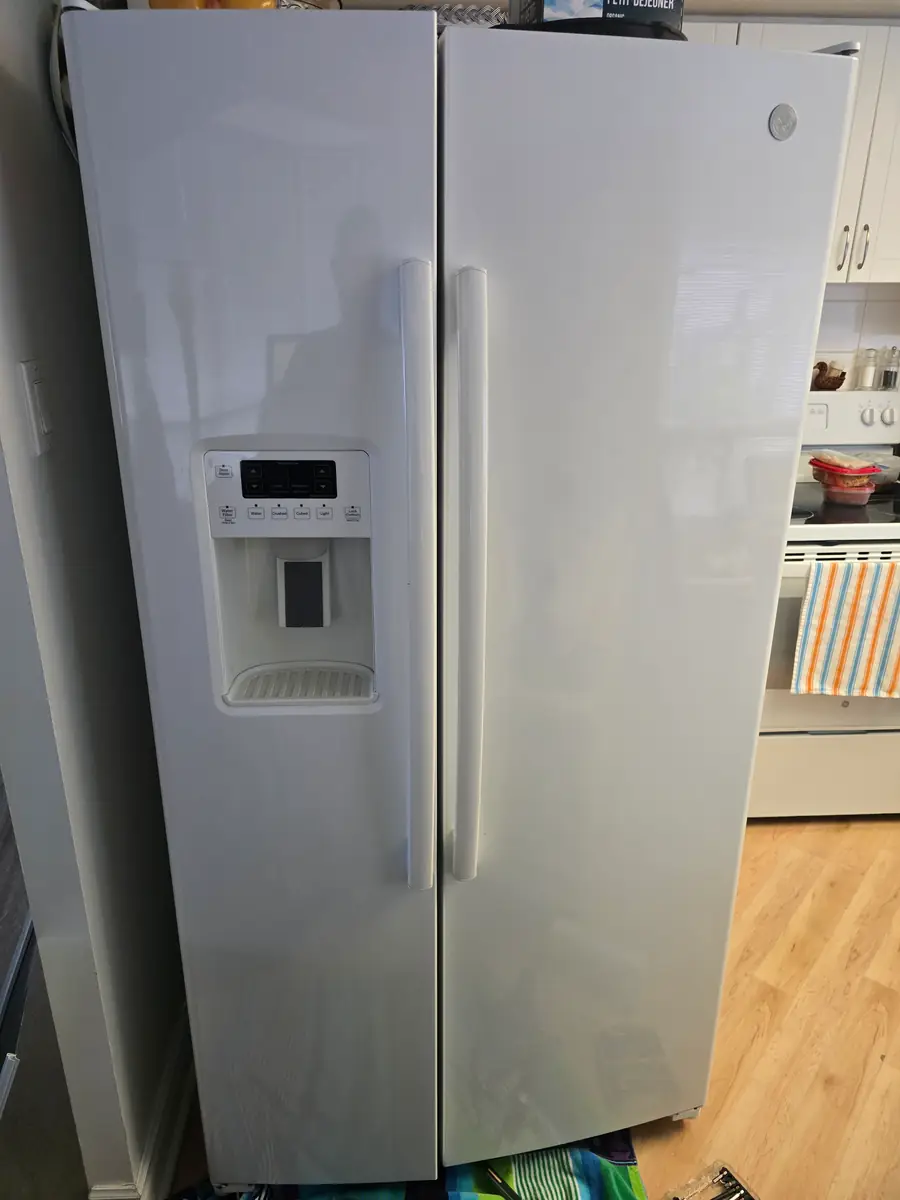
You open the freezer and the bread bends, the ice cream feels soft, or the ice cubes look wet. That does not always mean the compressor has failed. A door left slightly open, a blocked air vent, a recent grocery load, or a layer of frost can produce the same symptom. The useful question is not simply whether the freezer feels cold. It is whether it can reach and hold the correct temperature.
Start with the food
Keep the door closed as much as possible. Health Canada recommends a freezer temperature of -18°C (0°F) or colder. Use a freezer thermometer instead of judging by touch. If food still contains ice crystals or feels refrigerator-cold, Health Canada says it can be refrozen, although quality may change. When you are unsure how long food has been warm, follow official food-safety advice, not a smell or taste test.
Read Health Canada food-safety guidanceQuick diagnostic map
Which symptom matches your freezer?
Start with what you can observe. Similar temperatures can be caused by very different faults.
Completely warm
01No fan sound, no hum, no lights
Confirm the outlet, breaker and controls first. If the breaker trips again, leave the freezer off and arrange service.
Cold, but not freezing
02Soft ice cream or food slowly thawing
Measure the temperature, check the setting, door seal and blocked air vents, then allow time after recent loading.
Heavy frost
03Snow near the door or an icy rear panel
Look for a door-seal gap. A solid frost layer on the inside rear panel can point to a defrost or airflow fault.
Runs constantly
04Motor sound continues, temperature stays high
Improve ventilation and clean only accessible coils. Persistent running needs fan, sensor, compressor or sealed-system diagnosis.
Confirm the temperature before changing parts
Put an appliance thermometer near the centre of the freezer, between food packages rather than against a wall. Check it after the door has stayed closed for several hours. A display on the door usually reports the control setting or a sensor reading. It does not always tell you the temperature at the warmest food package.
If the appliance was just installed, moved, defrosted, or filled with unfrozen groceries, give it time. Depending on the model and the amount of food added, recovery can take many hours. Avoid turning the control to its coldest setting and repeatedly opening the door. That makes the diagnosis less clear and can slow recovery.
Check the simple causes that imitate a breakdown
Power and control setting
Confirm that the plug is secure, the outlet works, and the temperature control was not turned off while food was being loaded. Check for a tripped breaker once. If it trips again, do not keep resetting it. Repeated tripping can indicate an electrical or compressor fault.
Door closing and gasket contact
A package, drawer, or ice buildup can prevent the door from closing. Clean the gasket and the surface it touches with mild soap and water. Look for a torn section or a corner that does not sit flat. A simple check is to close the door on a strip of paper at several points. Some resistance is normal. A section that releases with no resistance deserves a closer look.
Air vents and loading
Freezers need space to move cold air around the cabinet. Do not pack food tightly against the air vents or the rear interior wall. At the same time, a nearly empty freezer changes temperature more quickly when the door opens. Rearrange packages so air can circulate without leaving the door open for long.
Room temperature and ventilation
A freezer in a hot garage, beside an oven, or pressed against a wall may struggle to release heat. Cold garages can also cause trouble for some refrigerator-freezer models because their controls are not designed for low ambient temperatures. Check the installation clearances and approved room-temperature range in the owner's manual.
Read the frost pattern
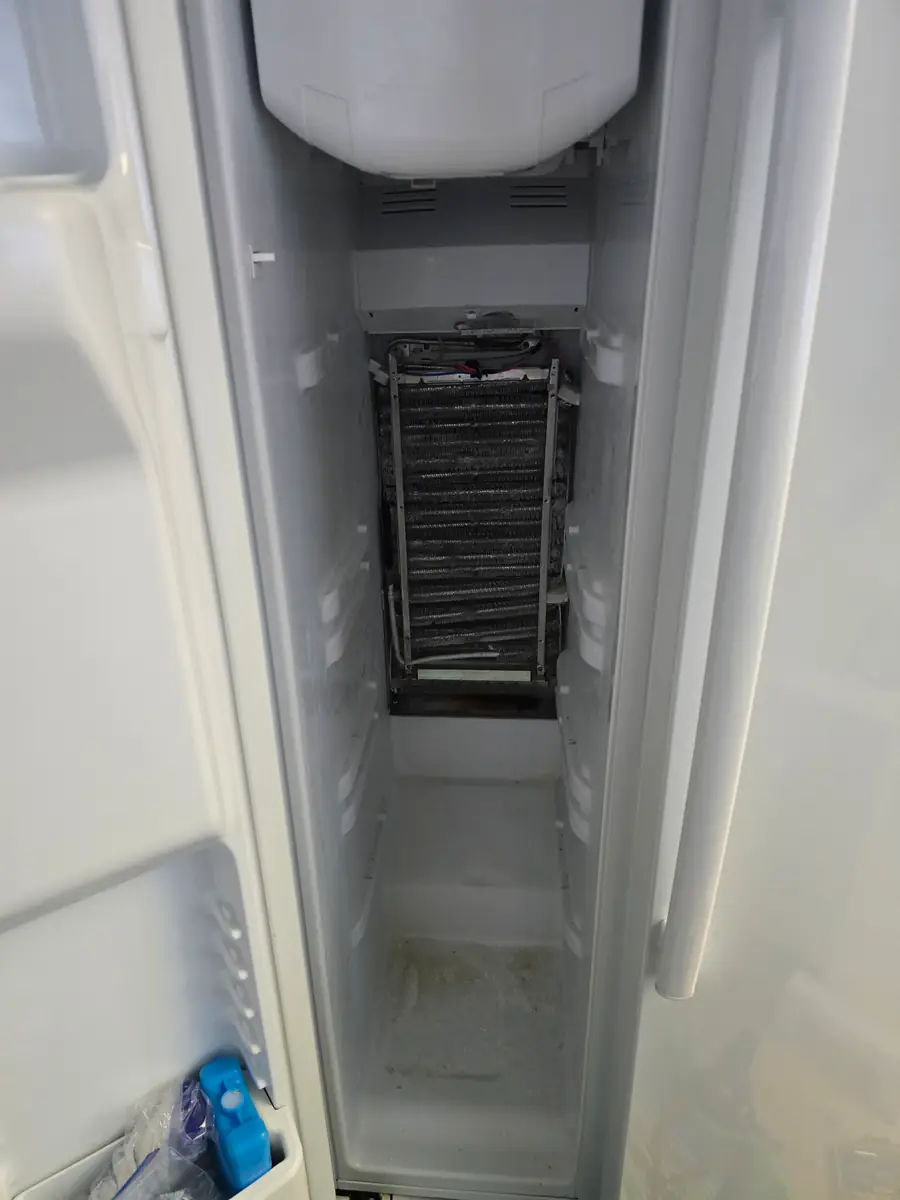
Frost location matters. Light frost or snow concentrated near the door often means warm, humid air is entering through a door that was left open or a gasket that is not sealing. A thick, fairly even sheet of frost over the inside rear panel is different. It can block the evaporator and prevent its fan from moving cold air, often because part of the automatic defrost system has failed.
Do not chip ice with a knife, screwdriver, or heat gun. Refrigerant tubing and plastic liners can be damaged easily. If the manual allows a full defrost, unplug the appliance, protect the floor, keep food in safe cold storage, and let the ice melt naturally. If the frost returns, defrosting treated the symptom, not the cause.
Listen to what starts, stops, or clicks
Sound cannot identify a failed part on its own, but it helps narrow the test. Note whether the sound comes from inside the cabinet or from the compressor area at the back or bottom. Many evaporator fans stop when the door opens, so use the door switch only if it is plainly accessible and the manual does not warn against it. Keep fingers and tools away from moving parts.
| What you notice | What a technician may test |
|---|---|
| Freezer is silent and dark | Power supply, outlet, breaker, control setting |
| Light works, but no cooling starts | Control, sensor, start device, compressor |
| Fan noise stops when the door opens | Normal on many models |
| Scraping or rattling behind the inner panel | Fan blade contacting frost or a worn fan motor |
| Repeated click every few minutes | Compressor start device, control or compressor problem |
| Thick frost on the inside rear panel | Defrost heater, sensor, control or blocked airflow |
| Only the top or bottom stays cold | Airflow restriction or fan problem |
The technical faults behind weak freezing
Evaporator fan: This fan moves air across the cold evaporator and through the cabinet. A failed motor, damaged blade, ice obstruction, or wiring problem can leave one area cold while the rest warms up.
Condenser airflow: Some models have exposed coils that can be cleaned according to the manual. Others use coils that are not intended for homeowner access. A blocked condenser, failed condenser fan, or poor clearance makes it harder for the refrigeration system to release heat.
Automatic defrost system: A heater, defrost sensor, fuse, wiring fault, or control problem can allow ice to bury the evaporator. The compressor may still run, but airflow and heat transfer fall sharply.
Temperature sensor or control: A thermistor reports cabinet temperature to the electronic control. An inaccurate sensor or control fault may start and stop cooling at the wrong time. Proper diagnosis compares temperature, resistance readings, wiring, and model-specific service information.
Start device, compressor, or sealed system: A repeated click, a very hot compressor shell, long run time with little cooling, or an unusual frost pattern can point to a start problem, inefficient compressor, refrigerant leak, or restriction. These faults require electrical and refrigeration-system testing. Adding refrigerant without finding a leak is not a proper repair.
Stop and arrange service
Warning signs that should not wait
- The breaker trips again after one reset
- You smell burning or see damaged wiring
- The compressor clicks repeatedly but will not stay on
- The freezer is warm after safe basic checks and adequate recovery time
- Thick frost returns after a complete defrost
- Oily residue appears near refrigeration tubing
What to tell the technician
Record the model number, thermometer reading, when the problem started, whether the fridge section is also warm, and any clicking, fan noise, frost, error code, or recent power outage. Mention if the appliance was moved or if the door was left open. Those details are far more useful than saying only that it is not cold.
Appliance Trust provides in-home diagnosis for refrigerators and freezers across Toronto and the GTA. See our refrigerator repair service, read the related guide for a warm refrigerator with a working freezer, or request an appointment online.
Common freezer questions
Why is my freezer cold but not freezing?
Start with the measured temperature. A poor door seal, blocked vent, recent food load, heavy frost, weak fan, dirty accessible condenser, sensor fault, or sealed-system problem can all leave the cabinet cool without reaching -18°C.
Can unplugging a freezer reset it?
A power cycle may clear a temporary control error, but it cannot repair a failed fan, defrost component, compressor, sensor, or refrigerant leak. Follow the owner's manual and protect the food before switching the appliance off.
How long should I wait before checking again?
Recovery time varies by model, room temperature, and how much warm food was added. Keep the door closed and use a thermometer. A newly installed or fully defrosted freezer may need many hours, sometimes up to a day, to stabilize. Follow the timing in the model's manual.