Bosch Dishwasher E24 Drainage Problem
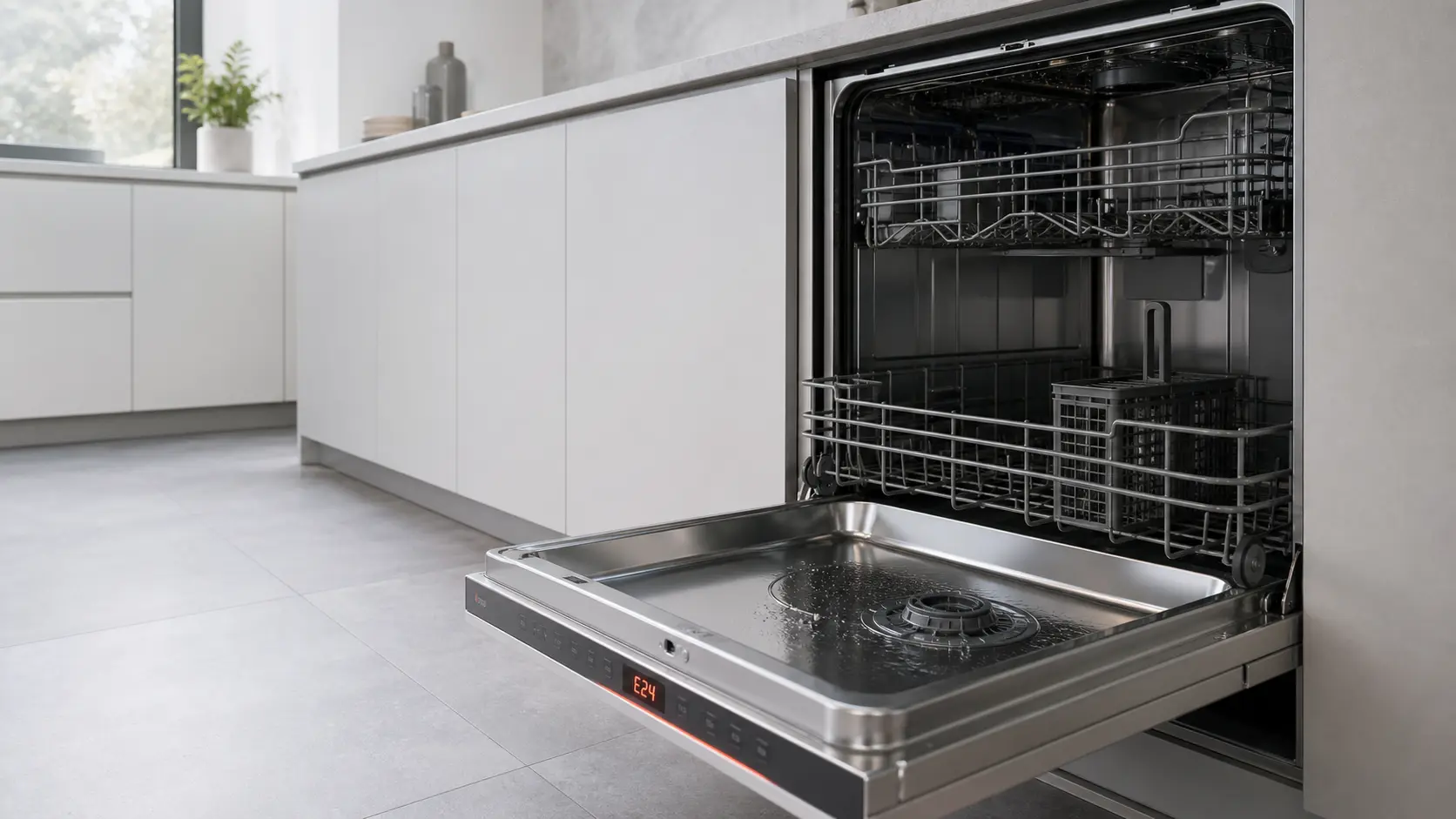
A Bosch dishwasher displaying error code E24 has detected a drainage problem. The appliance cannot remove wastewater properly, which may leave standing water in the bottom of the tub or interrupt the wash cycle. Fortunately, E24 is often caused by a blockage or an incorrectly fitted component rather than a major mechanical failure. This guide explains the most common causes and the steps you can take to get your dishwasher draining again.
What Does Bosch Dishwasher Error Code E24 Mean?
Bosch error code E24 means the dishwasher is not draining correctly. Likely causes include a dirty dishwasher filter, a blocked or kinked drain hose, debris around the drain pump, a loose drain-pump cover, a clogged air gap or sink connection, or a garbage-disposal knockout plug that was not removed during installation. You may also notice standing water, gurgling sounds, humming from the pump, unpleasant odours, or a cycle that stops before completion.
Before You Begin
Switch off the dishwasher and disconnect it from power before reaching into the filter or pump area. If the dishwasher is hardwired, turn off the appropriate circuit breaker. Allow hot water to cool before removing it. Wear protective gloves because broken glass or other sharp debris may be hidden inside the pump area. Consult your model's owner manual before removing components, since the exact design can vary.
1. Clean the Dishwasher Filter
A clogged filter is one of the most common reasons a dishwasher cannot drain. Remove the lower dish rack and locate the cylindrical filter at the bottom of the tub. Turn and lift the filter out according to the owner manual. Rinse it under running water and use a soft brush with mild soap to remove grease and food particles. Check the surrounding sump for debris, then reinstall the filter securely. An improperly seated filter can allow food particles to reach the pump.
2. Remove Standing Water
If water remains in the tub, remove as much as possible with a cup, sponge, or absorbent towel. This gives you safer and clearer access to the drain-pump area. A small amount of water beneath the filter can be normal. A substantial pool across the bottom of the tub indicates a drainage problem.
3. Check the Drain Pump and Pump Cover
The pump cover is normally located beneath the filter. Remove it only as directed in the manual for your model. Inspect the area for food scraps, pieces of glass, labels or plastic film, bones, seeds, other hard objects, grease, and detergent buildup. Carefully remove any visible obstruction. Make sure the pump cover is reinstalled securely and clicks into place. Do not force the pump impeller or disassemble the pump motor. If it appears damaged or will not move normally after visible debris has been cleared, arrange professional service.
4. Inspect the Drain Hose
Check the hose running from the dishwasher to the sink drain, air gap, or garbage disposal. Make sure it is not kinked, pinched behind the dishwasher, sharply bent, clogged with food or grease, or improperly routed. If accessible, disconnect the hose and check it for blockages. Have a bucket and towels ready because trapped wastewater may spill out. Only pull the dishwasher from its cabinet if you can do so safely without damaging the water line, power connection, flooring, or surrounding cabinetry.
5. Check the Air Gap and Sink Connection
Some dishwasher installations include a small air-gap fitting beside the kitchen faucet. Remove its cover and clear away accumulated debris. If the dishwasher drains through a garbage disposal, inspect the connection where the drain hose attaches. A blocked disposal or clogged connection can prevent the dishwasher from emptying. Run the garbage disposal briefly while keeping hands and tools away from it, then test the dishwasher again.
6. Check for an Unremoved Garbage-Disposal Plug
If E24 appeared after installing a new dishwasher or garbage disposal, the disposal's dishwasher inlet may still contain its factory knockout plug. That plug must be removed before the dishwasher can drain through the disposal. If you are uncertain how to check it, contact the installer or a qualified technician.
7. Reset the Dishwasher
Resetting the appliance may clear the displayed code, but it will not correct a physical blockage. Perform the reset only after checking the drainage system. On many Bosch models, you can reset a cycle by pressing and holding the Start button, or the button labelled Reset 4 Sec., for approximately four seconds. The dishwasher may take about a minute to cancel the cycle and attempt to drain. Controls vary, so follow the reset procedure in your model's manual.
What If E24 Comes Back?
If the code returns immediately, the drainage restriction may not have been completely cleared. Recheck the filter, pump cover, drain hose, air gap, sink connection, and garbage-disposal inlet. Recurring E24 errors can also indicate a failing drain pump, a damaged or internally collapsed drain hose, an electrical or wiring fault, a sensor or control problem, or a blockage deeper in the household plumbing. Avoid repeatedly resetting and running the dishwasher while it contains standing water.
When to Call a Dishwasher Technician
Arrange professional service when E24 remains after accessible blockages have been cleared, the drain pump only hums or makes grinding noises, water leaks from beneath the appliance, the drain hose or pump is damaged, the circuit breaker trips, you smell burning or see damaged wiring, the dishwasher must be removed from cabinetry, or the appliance is still under warranty. Have the full model number and error code ready when requesting service.
How to Help Prevent E24 in the Future
Scrape large food scraps from dishes before loading. Check and clean the filter regularly. Keep small objects and loose labels out of the dishwasher. Clean the pump area when drainage becomes noticeably slower. Avoid pouring grease or cooking fat into the sink. Keep the garbage disposal and air gap clear. Inspect the drain hose if the dishwasher or nearby plumbing is moved. Confirm that the pump cover and filter are properly seated after cleaning.
Frequently Asked Questions
Can I use a drain cleaner to fix E24? No. Chemical drain cleaners can damage dishwasher components and create a hazardous situation when hoses or pumps are opened. Will turning the dishwasher off clear E24? A power cycle may clear the display temporarily, but E24 will return if the drainage problem remains. Does E24 mean the drain pump is broken? Not necessarily. E24 is commonly associated with restricted drainage or a loose pump cover. A defective pump is possible if the system is clear and the error continues. Why did E24 appear after installing a garbage disposal? The disposal's dishwasher inlet may still contain its knockout plug, or the drain hose may have been kinked during installation. Is a little water beneath the filter normal? A small amount of water in the sump can be normal. Water pooling across the bottom after a cycle is not and should be investigated.